
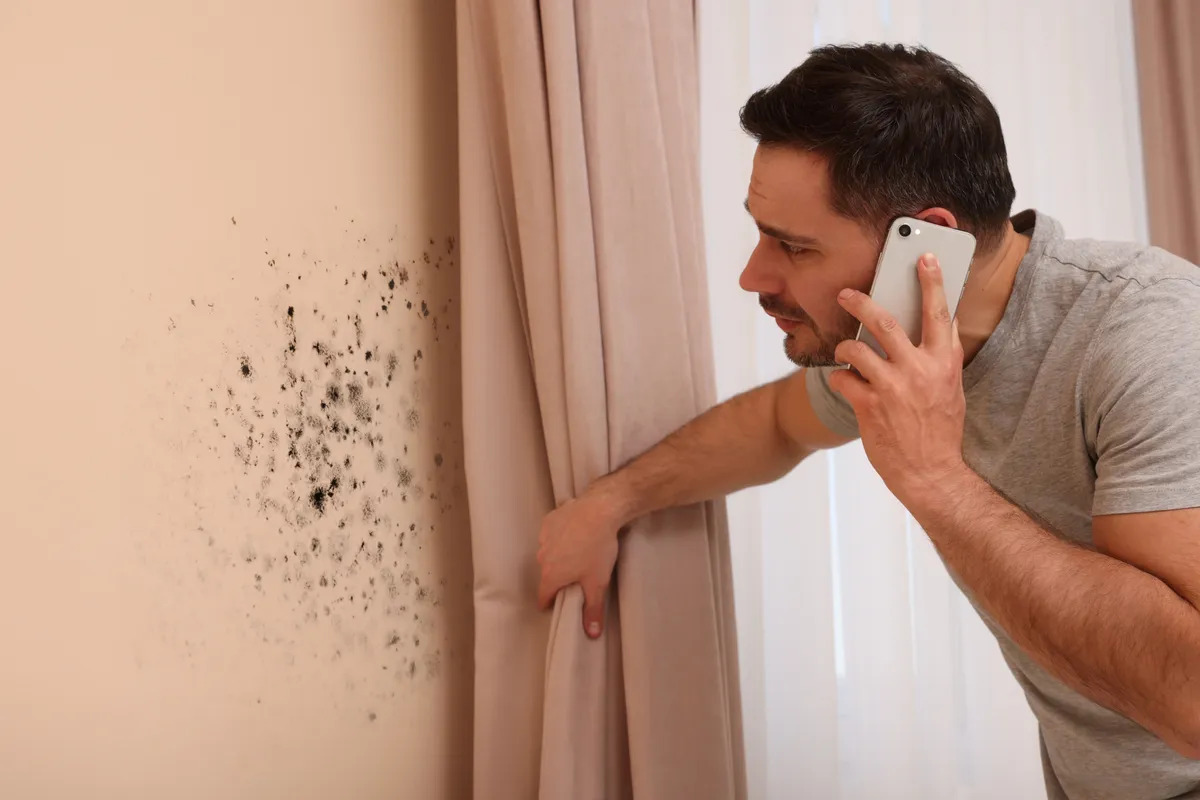
A tenant reports mold following a recurring plumbing leak and later alleges that the property manager did not adequately address the problem. The tenant seeks compensation for respiratory problems, damaged belongings and temporary housing.
Coverage for these types of property management professional liability claims varies drastically from policy to policy. E&O policies are not written on a standard industry form. Each carrier uses its own definitions, exclusions, carvebacks, sublimits and endorsements.
Here are several (problematic) ways mold claims are commonly addressed in E&O policies and where problems can arise for property managers. At the end, we explain what we recommend looking for when reviewing coverage.
Example #1: Mold Coverage Is Limited to Real Estate Sales
Some E&O policies include property management within their definition of professional services but limit mold coverage to situations in which the insured is acting as a real estate agent or broker representing a buyer or seller.
One common policy begins with a broad exclusion for claims arising from pollutants, mold, fungi or microbes. In this policy, mold, fungi and microbes are defined separately from pollutants. The policy excludes claims involving alleged exposure and failures to detect, report, test for, monitor, remove, respond to or advise others about mold/fungi or other pollutants.
The policy then provides a relatively broad carveback when an insured allegedly fails to advise someone about the existence of a pollutant. That carveback is not expressly limited to buyers, sellers or real estate sales.
So far, so good. The catch is that mold, fungi and microbes are separated from other pollutants, and the carveback for mold/fungi-specific claims is much narrower.
The mold carveback applies only when the insured, while acting as a real estate agent or broker, allegedly fails to advise a buyer or seller of residential property about mold, fungi or microbes at the property. Even then, coverage remains subject to transaction-specific conditions, such as ownership restrictions and required seller disclosures and buyer notices.
An available endorsement from this carrier can remove those additional conditions and expand “residential property” to “real property.” However, the insured must still be acting as a real estate agent or broker and advising a buyer or seller.
That is the gap for property managers.
A tenant alleging mold exposure is not a buyer or seller. An owner alleging that the property manager failed to report or address a mold condition may not fit the carveback either. The endorsement may broaden the protection to commercial real estate sales, but it does not clearly extend it to property management.
Takeaway: Finding property management in the professional-services definition is not enough. The mold and pollution definitions, exclusions and carvebacks must also be reviewed to confirm that they apply to property management services.
Example #2: Mold Claims Are Subject to a Sublimit
Some policies cover mold claims arising from property management services but place them under a lower sublimit, like $100,000.
For example, one policy defines Pollutants to include mold, along with biological and radiological contaminants, asbestos, germs and other irritants or contaminants. The policy contains a broad pollution exclusion but makes an exception for a “failure-to-disclose-pollutants claim.” That term is defined as a claim alleging the failure to disclose the existence of pollutants.
Because mold falls within the definition of Pollutants and Professional Services includes property management services, the carveback can apply to a property management claim alleging a failure to disclose mold.
The issue is the amount of coverage available. In this example, the policy has a $1 million professional liability limit but only a $100,000 aggregate sublimit for failure-to-disclose-pollutants claims.
Both damages and claim expenses fall within that lower aggregate sublimit. Any amounts paid are also part of, rather than in addition to, the overall professional liability limit.
The mold carveback includes property management services, but every covered failure-to-disclose-pollutants claim during the policy period shares the $100,000 aggregate.
Takeaway: A policy may technically cover mold claims arising from property management services while still limiting all related damages and defense costs to a much lower aggregate sublimit.
Example #3: Mold Is Specifically Excluded
Some property management E&O policies do not provide any meaningful mold carveback and instead exclude mold claims entirely.
In one example, a common E&O policy in the property management space defines Pollutants to include mold, spores, fungi and germs. The policy excludes claims arising from Pollutants, and the property management endorsement adds a separate mold exclusion.
That exclusion applies broadly to claims arising from the formation, growth, presence, release, containment, removal, testing, detection or monitoring of mold, fungi, spores and similar organic growths. The property management endorsement does not provide a failure-to-disclose carveback or mold sublimit.
Some firms may also carry a separate real estate agent and broker endorsement with this form. That endorsement creates a $100,000 carveback for failure-to-disclose-pollutants claims arising from real estate services. However, it does not clearly extend the carveback to property management services or remove the separate mold exclusion added by the property management endorsement.
Another common carrier in the property management space excludes mold through an endorsement defining organic pathogens to include mold, fungi, bacteria, viruses and related byproducts such as mycotoxins and mildew. It broadly excludes claims involving their existence, release, testing, removal or treatment.
The endorsement goes further by specifically excluding claims involving water damage, or an alleged failure to disclose water damage, that results in mold or another organic pathogen.
These policies use different wording and endorsements, but the result for the property manager is similar: mold claims arising from property management services are excluded rather than carved back with sublimited or otherwise available coverage.
Takeaway: Real estate and property management professional liability policies often contain sweeping mold or organic-pathogen exclusions.
Don't Forget the Contingent Bodily Injury/Property Damage Provision
Even when a policy provides a mold carveback, separate bodily injury and property damage provisions may limit coverage for a tenant's illness or damaged belongings.
A mold carveback or $100,000 mold sublimit may not tell the whole story.
If a tenant alleges sickness from mold exposure, the claim also involves bodily injury. If the tenant alleges damage to clothing, furniture or other belongings, the claim may involve property damage as well.
In some cases, the failure-to-disclose-mold carveback may be enough to trigger a defense for the claim, while separate bodily injury and property damage provisions limit what the policy will pay toward those portions of the damages.
For example, the carrier might defend the mold claim but apply a $25,000 contingent bodily injury/property damage sublimit to damages arising from the tenant's illness or damaged belongings. If the policy only carves contingent bodily injury/property damage coverage back for lockbox or open-house claims, those damages may not be covered at all.
The exact result depends on the allegations and how the policy's defense, mold and contingent bodily injury/property damage provisions interact.
Takeaway: Mold coverage and contingent bodily injury/property damage coverage must be reviewed together. A mold carveback may provide some protection without necessarily covering every category of damages alleged in the claim.
Learn more in our article, Why Property Managers Need “Contingent BI/PD” E&O Coverage.
The Approach We Prefer for Property Managers' E&O
The PBI Group endorsement addresses the alleged failure to disclose mold when it arises from either real estate or property management professional services.
Under the PBI Group endorsement, mold and fungi are defined separately from other pollutants. Separating those definitions is not inherently a problem. The important question is whether the fungi provision includes property management services, and whether the policy provides a carveback for claims arising from those services.
The policy broadly defines “Fungi” to include mold, mildew and other forms of fungus, along with related spores, odors, mycotoxins and byproducts. It then defines a “Fungi Claim” as a claim arising from Real Estate Professional Services and resulting from an insured's alleged failure to disclose the existence or presence of fungi, mold or bacteria in real property. Real Estate Professional Services includes property management services under our policy.
The definition is not limited to an insured acting as a real estate agent or broker for a buyer or seller. It is not restricted to a residential purchase or sale, and it does not depend on transaction-specific seller disclosures or buyer inspection notices.
Other pollutants, including asbestos, lead paint and radon, are addressed separately, but also carved back for the alleged failure to disclose for both PM and real estate professional services. The policy also includes a contingent bodily injury/property damage carveback applicable to real estate and property management professional services.
Takeaway: We recommend policy language that expressly includes property management services within the mold/fungi + pollutants carveback(s), and that coordinates that protection with the policy's contingent bodily injury/property damage carveback.
If you would like a second set of eyes on your coverage to see how it addresses mold, fungi, and other pollutants coverage for real estate or property management, feel free to schedule a call with me here. We are always happy to discuss these coverages in depth, answer your questions, and help you review your policy together.
Of course, coverage depends on the allegations, facts of the claim and the specific terms, conditions, exclusions, limits and endorsements of your specific policy. This article is for general summary and educational purposes only.