
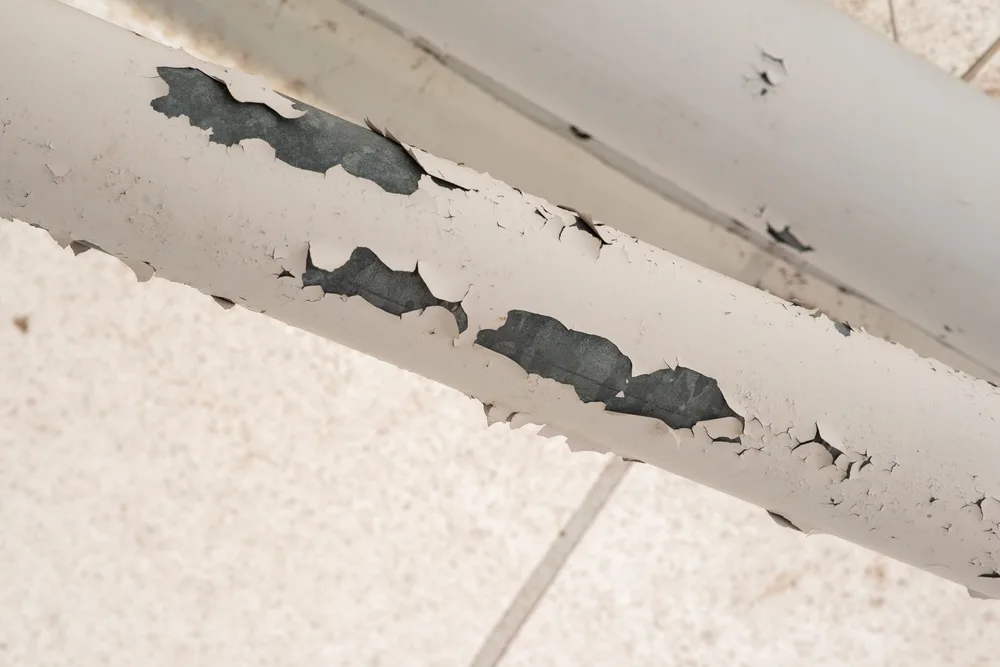
A tenant alleges their child suffered lead poisoning at a managed rental. The complaint accuses the property manager of failing to disclose the condition or adequately responding.
Lead paint claims can arise from real estate sales or property management services. This article focuses on management claims. Keep in mind that an E&O policy covering both real estate and property management services may still restrict pollution coverage to real estate sales only.
Below are a few common scenarios of how professional liability policies might address lead claims for property managers.
Failure-to-Disclose Coverage Sublimited
Most E&O policies exclude pollution claims, but many then make an exception (carveback) for “failure to disclose the existence of a Pollutant.” Lead may be included in the definition of Pollutants or addressed separately, so review that definition carefully.
That exception may be sublimited (e.g. $100k for damages and claim expenses combined). Defense costs reduce the amount available for settlement, all qualifying claims share the sublimit, and payments also reduce the overall policy limit.
Some exceptions also apply only to residential properties with “1–4 residential units.”
Takeaway: Check whether a sublimit applies to a carveback to the pollutant’s exclusion.
Lead Excluded Without an Applicable Exception
Other forms broadly exclude claims involving lead and other pollutants, including their “presence,” “exposure to” or “ingestion,” without any sort of exception or carveback.
Or an endorsement offering some failure to disclose pollutants coverage may still leave lead excluded. For example, an exception might list radon, asbestos and other substances but omit lead, while leaving the rest of the exclusion unchanged.
Takeaway: A pollution endorsement does not necessarily cover every pollutant, and it may not be carved back for failure to disclose.
Real Estate Coverage Does Not Necessarily Extend to PM Claims
A policy could have separate real estate / property management services endorsements, each defining its own professional services and modifying different exclusions.
The real estate endorsement might restore failure-to-disclose-pollutants coverage while the PM endorsement adds management services, without clearly extending that exception to those services. Similarly, a carveback limited to advising “buyers or sellers” in the capacity of a “real estate agent or broker” may not cover a tenant’s claim arising from management duties.
Takeaway: Read the form and all endorsements together. Do not assume that a failure to disclose pollutants coverage in a real estate endorsement applies to property management services.
Pollution Carved Back, but Bodily Injury Still Excluded
A pollution exception does not automatically override a separate bodily injury/property damage exclusion.
Many PM E&O forms retain bodily injury exclusions, often with exceptions only for lockbox or open-house claims. Others expressly exclude BI/PD arising from the insured’s “capacity as a Property Manager.” Neither approach provides a clear path for any bodily injury/property damage portion of a tenant’s alleged lead poisoning.
Other policies restore broader professional-services BI/PD coverage but apply a separate, lower sublimit. A $100,000 pollution sublimit does not automatically make $100,000 available for bodily injury if another provision restricts that coverage.
Both the pollution and BI/PD provisions must be reviewed before describing lead-related injury claims as covered. Their interaction can affect defense obligations and/or payment of damages.
You can read more about the sweeping implications of Contingent Bodily Injury/Property Damage E&O coverage for PM’s here.
The PBI Group Approach
Our PBI Group/Palomar endorsement provides an exception to the traditional pollution exclusion to the extent a claim results from failure to “disclose, report, detect or advise” of the existence of pollutants, lead paint or radon.
Property management is included within covered Real Estate Professional Services. The exception is not restricted to buyers or sellers and does not impose a separate pollution sublimit.
A separate contingent BI/PD provision addresses qualifying professional-services claims, subject to its conditions and exclusions, including maintaining qualifying GL coverage and submitting potentially applicable claims to that insurer.
Related Issue: EPA Legal-Expense Reimbursement
Over the past few years, NARPM and other PM associations have highlighted property managers’ responsibilities under the EPA’s lead-based paint Renovation, Repair and Painting (RRP) Rule, including certification requirements and EPA investigations into compliance at pre-1978 properties. These issues can arise from arranging or overseeing repairs, not just performing the work directly.
Our policy now provides up to $10,000 total per policy period to reimburse reasonable and necessary attorneys’ fees, costs and expenses incurred in complying with a qualifying EPA audit or investigation relating to covered professional services. Expenses require prior written carrier consent.
This benefit helps the PM pay qualifying legal expenses in responding to the EPA. It does not pay for the audit itself, fines, penalties or lead cleanup, and it is separate from coverage for a 3rd party claim of failure to disclose a pollutant. But it can pay for a qualified attorney to help you negotiate an EPA audit.
If you would like help reviewing your policy’s lead paint, pollution and BI/PD provisions, we are happy to review the wording with you.
*Coverage depends on the specific facts, allegations and your actual policy’s complete terms and conditions. This article is for general educational purposes.