

Real estate E&O policies typically do not cover wire fraud.
Most contain broad exclusions involving the conversion, misappropriation or theft of money, along with failures to collect, safeguard, pay or disburse deposits, escrow funds and other sums of money. If funds are stolen during a real estate transaction, the starting point under many E&O policies is an exclusion.
Cyber insurance is designed to address most of the broader wire-fraud exposure. Depending on the policy and facts, it may respond when a real estate firm's email is compromised, a client sues because the firm's network was breached, an employee is deceived into sending money or a criminal transfers funds directly from an account.
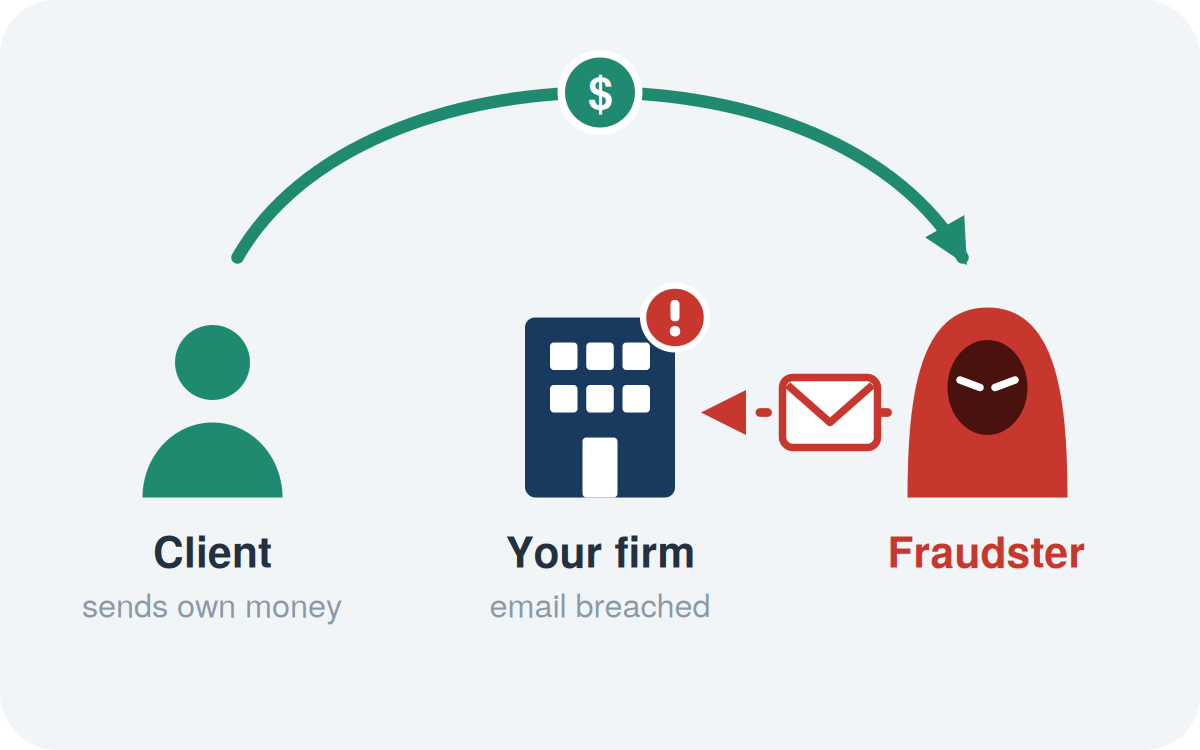
However, there is a separate E&O exposure that is easy to miss: a client is deceived into wiring money and alleges that the real estate professional's negligence helped cause the loss. Only a limited number of real estate E&O policies provide a specific carveback for that type of professional-negligence claim.
What Does Wire Fraud Negligence Look Like?
Consider a buyer preparing to wire closing funds. The buyer receives fraudulent instructions that appear to come from someone involved in the transaction. An agent then forwards the fraudulent email or wiring instructions to the buyer without independently verifying them. The buyer sends the money to the criminal, the funds cannot be fully recovered, and the buyer makes a claim against the agent and brokerage. The allegation is not simply that money was stolen. The buyer alleges that the real estate professional was negligent in providing professional services and that the negligence contributed to the loss. That is where a wire-fraud negligence carveback under the E&O policy can matter.
For example, I have seen a claim where a top-producing real estate agent forwarded fraudulent wiring instructions, where a hacker took advantage of the confusion and changes of March 2020. It was settled in mediation much later for tens of thousands of dollars.
How the PBI Group E&O Endorsement Responds
The underlying E&O policy contains a broad exclusion for claims involving money and funds.
But the PBI Group endorsement creates a specific exception to that exclusion. The exception applies to a claim resulting from a client being intentionally deceived into wiring funds that are partly or wholly unrecoverable because of an insured's negligence or error in providing Real Estate Professional Services. Currently, our coverage provides a $35,000 sublimit for claim expenses and damages. That sublimit is within, rather than in addition to, the policy aggregate. This is not blanket wire-fraud coverage. It is a targeted carveback for a third-party professional-liability claim against the insured. The client must have been deceived into wiring funds, the funds must be partly or wholly unrecoverable, and the claim must allege that an insured's negligence or error in providing covered real estate professional services caused the loss.
Takeaway: A good real estate E&O policy should not stop at a broad funds exclusion. It should include an express carveback for claims alleging that a client was deceived into wiring money because of the insured's professional negligence.
Why Cyber Insurance Is Still Necessary
The E&O carveback addresses one narrow part of the exposure. It does not replace stand-alone cyber insurance.
Cyber coverage should be reviewed for the more common wire-fraud and cyber-event scenarios, including:
- The firm's email or network is compromised. Network Security and Privacy Liability may respond when a client alleges that the breach caused its loss.
- The firm is deceived into sending money. Social Engineering Coverage may respond when an employee acts on fraudulent instructions.
- A criminal transfers money without deceiving an employee. Electronic Transfer Fraud Coverage may apply when an attacker accesses an account and moves funds directly.
- The firm incurs breach-response expenses. Cyber insurance may cover breach counsel, forensic investigation, notification, data restoration and crisis-management costs.
- Client funds are stolen from the firm's account. The cyber policy must be reviewed to confirm that it protects qualifying customer funds in the insured's care, custody and control, rather than only the insured's own money.
For example, if a criminal compromises the brokerage's email account and uses it to send fraudulent wiring instructions to a buyer, that is a cyber event. The resulting client claim should be addressed through the cyber policy's Network Security and Privacy Liability coverage, not treated as a substitute use for the limited E&O negligence carveback. This E&O carveback does not cover those 3rd party wire fraud cyber claims.
Learn more in our guides to cyber insurance for real estate firms and wire fraud involving client funds.
What to Check in Your Policies
Confirm your E&O policy expressly covers a client's wire-fraud loss caused by your professional negligence, and check the applicable sublimit and whether it covers both damages and claims expenses. Because few E&O carriers offer this protection, it should never be assumed. Cyber insurance is still needed for compromised email, social engineering, electronic transfer fraud and stolen client funds. PBI Group would be happy to help you review how both policies respond. Here's a link to my calendar for a policy review.
Of course, coverage depends on the allegations, facts of the claim and the specific terms, conditions, exclusions, limits and endorsements of each policy. This article is for general summary and educational purposes only.