
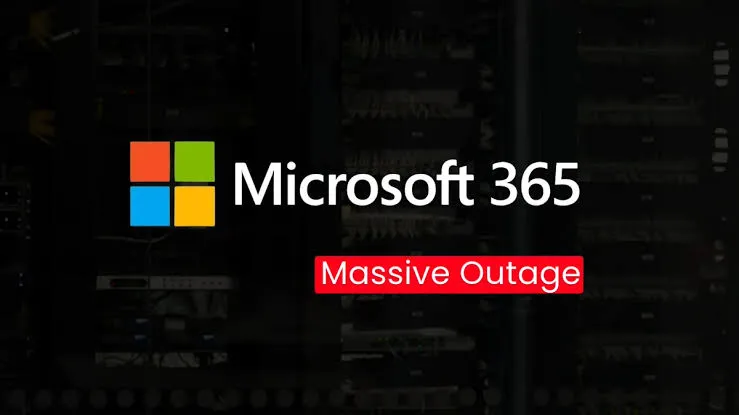
On Thursday, November 12, 2026, shortly before 1 p.m. Eastern, Microsoft's email service went down, and for many businesses it stayed down for most of two days. Outage reports passed 130,000 on Downdetector. Teams, SharePoint and Copilot went down with it. Fixes didn't hold on Friday, and Microsoft did not announce full restoration until early Saturday, November 14.
No hacker was involved. Microsoft ruled out malicious activity and traced the failure to a problem from an earlier network capacity upgrade that surfaced after a later network change.
For a real estate brokerage, title or escrow office, or property management company, email is how the business runs. Offers, disclosures, closing instructions, wire confirmations, maintenance requests and owner reports all move through the inbox. A two-day outage means stalled transactions, missed deadlines, and staff paid to wait.
That raises a question we're hearing a lot right now: if a cloud provider I depend on goes down, does my cyber policy pay for the business I lose? The answer depends on how your policy handles business interruption. That's where cyber policies differ the most.
Hacks vs. outages: the gap most policies leave open
Many cyber policies pay business interruption losses only when the cause is a network security breach: a hack, malware, or a denial-of-service attack. An outage like Microsoft's, caused by a bad network change, doesn't fit that definition. A breach-only policy may pay nothing.
The Arch NetSafe® 2.0 policy we offer through PBI Group closes that gap. Our Business Interruption endorsement adds three triggers on top of security breaches:
- System Failure: an unintentional, unplanned outage of a computer system. No hacker required.
- Technology Contractor: an outage or breach at a cloud, software, hosting or managed IT vendor you rely on under a written contract.
- Voluntary Shutdown: you choose to take your own systems offline, with Arch's consent, after a breach is discovered, to limit the damage.
When one of these applies, the coverage replaces lost net income and pays continuing operating costs, including payroll. It also pays the extra costs of keeping the business running, such as temporary staff or a manual workaround.
What causes the interruption matters
The limit available depends on what caused the interruption and whose system went down. Each sublimit is part of your policy limit, not in addition to it. The $250,000 sublimits are the same whether you carry a $500,000 or a higher policy limit.
| What causes the interruption | Coverage available |
|---|---|
| A hack or breach of your own systems | Full limits |
| An outage of your own systems (System Failure) | Full limits |
| You voluntarily shut down your systems after a breach (with Arch's consent) | Full limits |
| A breach at a Dependent Business (a non-technology vendor that provides essential services under contract) | Full limits |
| An outage at a Dependent Business | $250,000 |
| A breach at a Technology Contractor (cloud, email, software, hosting or managed IT vendor) | $250,000 |
| An outage at a Technology Contractor | $250,000 |
A cloud email or software provider is a Technology Contractor, not a Dependent Business. An outage like Microsoft's falls in the last row.
Waiting periods and how long coverage lasts
Business interruption coverage starts after a 12-hour waiting period and can run for up to 180 days.
| Coverage | Waiting period | Maximum recovery period |
|---|---|---|
| Business Interruption, including System Failure, Technology Contractor and Dependent Business | 12 hours | 180 days |
| Reputational Harm (income lost to bad publicity about a breach) | 14 days | 6 months |
| Breach response, liability, cyber extortion, cyber crime | None | Not applicable |
Losses during the first 12 hours still count toward your deductible. The recovery period ends when the interruption ends, or when it would have ended if you had moved quickly to restore operations. The base policy form allows only 30 days. Many competitor policies cap recovery at 30, 60 or 120 days and use waiting periods of 24 hours or more.
What's excluded: the vendor and outage exclusions
Even a strong policy has limits, and we'd rather you hear about them now than after a claim. These exclusions apply to the System Failure, Technology Contractor, Dependent Business and Voluntary Shutdown coverage.
| Exclusion | What it means in practice |
|---|---|
| End-of-life or unsupported technology | No coverage if the software or hardware is end-of-life or end-of-support, or the vendor's technical support has expired or been withdrawn. |
| Internet infrastructure providers | Outages caused by an internet service provider, a DNS provider or a certificate authority are not covered. |
| Utility providers | Outages caused by power, telecom, satellite, water or other utility failures are not covered. |
| Financial services providers | Failures of a bank, exchange or similar financial services provider are not covered. |
| Physical events | Fire, flood, earthquake, wind, lightning, explosion or other physical events are excluded, including at a vendor's data center. |
| Intentional outages | An outage caused on purpose by you, your technology vendor or a dependent business is not a System Failure. Planned maintenance doesn't count. |
| Government action | Seizure, confiscation or destruction of property or data by government order is excluded. |
The base Business Interruption coverage also has standard exclusions, including war (cyberterrorism is carved back in), prior known matters and liability to third parties.
How an outage like Microsoft's would be evaluated
An outage like the November 12 event would most likely be treated as a System Failure at a Technology Contractor, with a $250,000 sublimit. Here's how the pieces line up:
- The trigger fits. No one hacked anything. Microsoft has said the failure was unplanned and traced to its own network changes. That is the kind of event System Failure coverage is written for, and a breach-only policy would not respond to it.
- The vendor qualifies. Microsoft 365 is a cloud email and software service you subscribe to under a written agreement, which makes it a Technology Contractor.
- The waiting period was exceeded. The outage began Thursday afternoon and stayed disrupted in parts of the world through Friday, well past 12 hours.
- The cause wasn't excluded on its face. The reported cause was Microsoft's own network change, not an internet service provider, utility or physical event.
An outage alone isn't a claim, though. The policy pays for actual, measurable lost income and extra costs. If your team kept working by phone and nothing was lost, there's nothing to recover. If a closing slipped, commissions were delayed, or you paid staff overtime to rebuild a backlog, those are the losses you document. Every claim is decided on its own facts and the policy wording.
Five steps to take before the next outage
- Read your declarations page. Look for System Failure, Dependent Business and Technology Contractor coverage. If business interruption is triggered only by a security breach, a vendor outage like Microsoft's may not be covered.
- Check the waiting period and recovery period. Look for 12 hours or less and up to 180 days. A 24-hour wait or a 30-day cap can wipe out most of a claim.
- Keep your vendor agreements on file. Coverage for a cloud vendor requires a written contract. Accepted online terms of service count, so save a copy.
- Stay on supported software. End-of-life and end-of-support systems are excluded. Retire them before they cost you coverage.
- Document the impact as it happens. Note when the outage started, what work stopped, what deals or deadlines slipped, and what you spent to keep going. Report it to Arch Claims as soon as practicable.
Not sure how your current policy would respond to an outage like this? Send us your declarations page and we'll compare it, with no obligation. Call (443) 502-5645 or start on our Get Started page.
This article is a general summary of the Arch NetSafe® 2.0 program offered through PBI Group. Coverage is subject to the actual policy terms, conditions, limits and exclusions.
Sources
- Microsoft Outlook Down: Over 130,000 Outage Reports, TechRepublic, Nov. 12, 2026
- Microsoft points to a latent bug behind its day-long Outlook outage, Webhosting.Today, Nov. 16, 2026
- Microsoft 365 global outage hits Outlook, Teams, Copilot, Latin Times, Nov. 13, 2026
- Massive Microsoft 365 outage disrupts Outlook, Teams, Copilot worldwide, BleepingComputer, Nov. 12, 2026